An independent family business • Printed with care... by our family for yours
Call Us - 9:30am - 5pm
01824 562 011
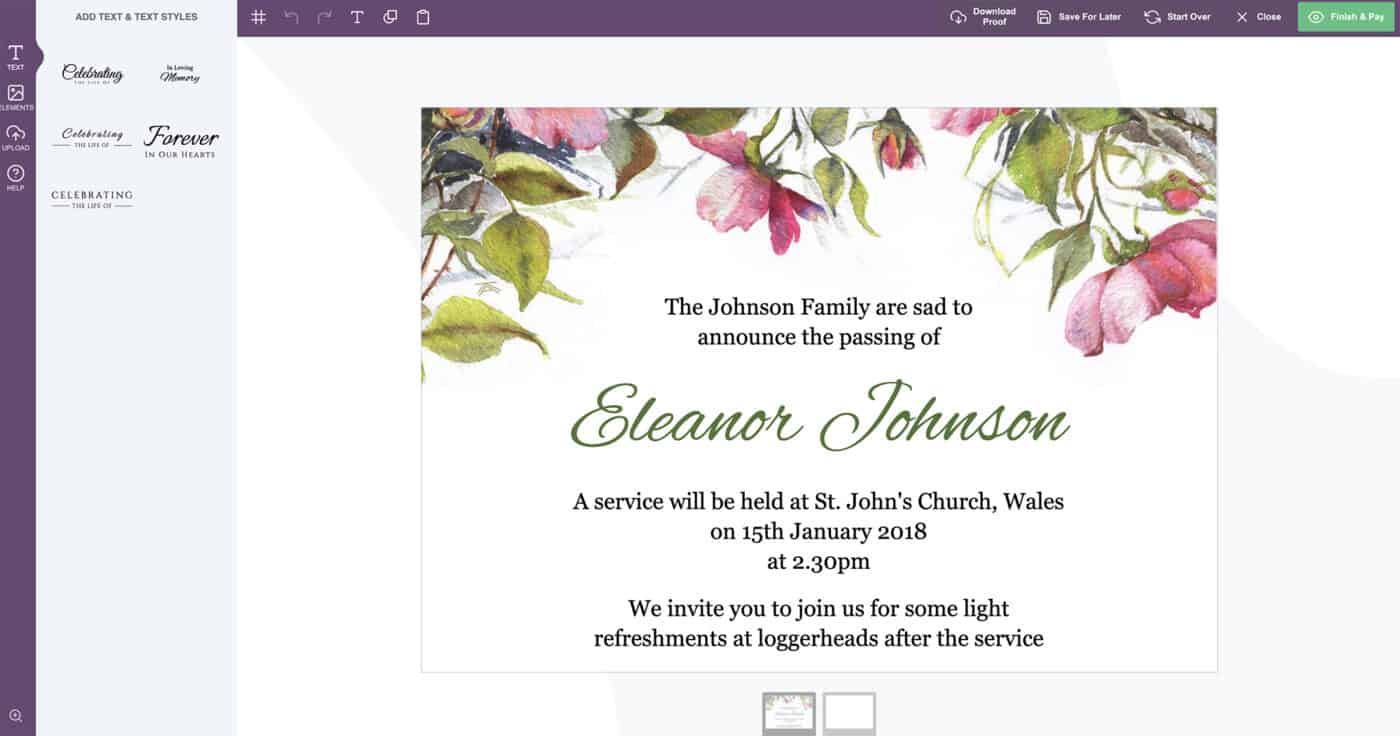
Browse our full range of funeral thank you card designs and personalise one online in a few minutes. Change the wording, colours, fonts and photos to suit your loved one, then either download a free digital copy to share by WhatsApp or social media, or order printed cards — hand-finished on 350gsm card and delivered next working day if you order before 12 noon.
If you'd rather not design it yourself, our free "Designed by Us" service means one of our team can put a card together for you at no extra cost.


Read all verified reviews on Reviews.co.uk
You have complete freedom to change all text, colours and fonts to your exact requirements.
Upload photos with the click of a button.
It only takes a few minutes to personalise a design online.
Saying thank you can help heal in times of loss. Personalised funeral thank you cards are a thoughtful way to show gratitude. They let families say thanks while remembering their loved one.
Creating these cards lets us think about the kindness of friends, family, and our community. Whether they contain a heartfelt message or a photo, they remind us of our thanks and memories.
Funeral thank you cards help express gratitude during bereavement
Personalisation adds a meaningful touch to acknowledgement cards
These cards serve as a way to honour the departed's memory
Crafting messages can be a therapeutic part of the grieving process
Bereavement acknowledgement cards strengthen connections with supporters
Funeral thank you cards are essential in the grieving process. They let us say thanks and show we value the support we got when we needed it most. These cards help connect the bereaved with those who supported them, aiding in healing and building bonds.
Writing condolence cards can be healing for those who are mourning. It shifts the focus from sorrow to gratitude, aiding emotional recovery. By writing these notes, people can reflect on the kindness they've received, which brings comfort and offers a new perspective.
Sending thank you cards after a funeral shows that we see the hard work of friends, family, and the community. It tells them their help matters. This kind of recognition is very touching for both the giver and the receiver.
Condolence cards keep relationships strong when times are tough. They keep the lines of communication open and show loved ones how much they mean to us. These personal messages can lead to more support and deeper connections after loss.
Choosing the right design for your sympathy cards is a thoughtful process. The cards should reflect your loved one's personality and show your thanks. Look for designs that match your family's style and the interests of the person who has passed away.
Floral designs are a classic choice for these cards. Soft, watercolour flowers can make the card feel calm. Bold flowers might suit someone with a lively personality. Nature themes, like landscapes or butterflies, can represent peace and change.
Consider cards with your loved one's favourite colours or patterns for a personal touch. Some people choose cards that show a special symbol or hobby, such as a musical instrument for a music lover or a paintbrush for an artist.
"The right design speaks volumes about your loved one and touches the hearts of those who supported you."
The card's quality is as important as its design. Pick sturdy, textured paper that feels important. This shows you appreciate their support during a tough time.
The best design feels true to you and respects your loved one's memory. Take your time to look at different options. Trust your feelings when choosing the right design for your bereavement cards.
Creating personalised funeral tribute notecards lets you express your gratitude. These cards become precious keepsakes for those who supported you, turning simple cards into lasting memories.
Put a favourite photo of your loved one on the card. It brings comfort and makes people remember happy times. Add a quote that reflects their spirit or outlook on life. Together, they make potent cards of remembrance.
Write a short, touching story about your loved one. It helps people feel closer to them. It could be a funny story, a kind act, or a big achievement that showed who they were.
Choose colours and themes that match your loved one's personality or interests. If they loved nature, go for soft greens and flowers. For a music fan, use musical notes or their favourite instrument. These details make your cards stand out.
"A personalised card speaks volumes about the care and thought you've put into expressing your gratitude."
You create keepsakes that truly honour your loved one by personalising your cards. They show real thanks for your support when you need it most.
Writing condolence notes can be challenging when you're grieving. These messages are a way to say thanks for the support and remember a loved one.
Start by saying thanks for the kind things people did for you. It shows you care about their support. For instance:
"Your thoughtful words and the beautiful flowers you sent brought comfort during this difficult time."
If it feels right, talk about a fond memory of the person who passed away. This makes your message more personal and celebrates their life. Be honest and skip the usual phrases. Stick to real feelings and thanks.
Adding a quote or verse that means a lot can make your card even more meaningful. It helps both you and the person reading it find comfort. Just make sure your message is short but full of feeling.
Express gratitude for specific acts of kindness
Share a brief memory of the departed
Include a meaningful quote or verse
Keep the message sincere and concise
Finish your note with a warm word that shows your bond with the person. These messages will be treasured as reminders of the support you got through a hard time.
Sending funeral thank you cards shows you care and are grateful for support during tough times. The right time to send them is key to expressing your sincere thanks.
Some send bereavement acknowledgement cards right after the funeral, while others wait a bit. There's no hard rule, but sending it within two to three weeks is a good idea. This gives you time to think and heal.
If you're too overwhelmed, it's okay to wait. Your health is most important, and people get how hard it is to lose someone close.
Different cultures have their ways of mourning and showing thanks. It's important to consider these customs when sending funeral thank you cards to people from various backgrounds.
Culture Typical Mourning Period Recommended Timing for Thank You Cards Western Varies 2-3 weeks after the funeral Jewish seven days (Shiva) After Shiva ends Hindu 13 days After the 13-day mourning period Buddhist 49 days After the 49-day mourning period
What matters most is sending heartfelt bereavement acknowledgement cards. Your true thanks will be valued, no matter when you send them.
Crafting memorial gratitude notes is a special way to celebrate your loved one's life. These messages are a lasting tribute, meaningfully combining memories and thanks.
When making condolence cards, think about what made your loved one special. Include their passions, achievements, or favourite moments. This honours their memory and comforts those who get the cards.
A favourite quote or saying of the deceased
A brief anecdote that captures their spirit
Mention of a charitable cause they supported
A description of their lasting impact on others
Adding these personal touches makes your notes special keepsakes. They offer comfort and connection to everyone who gets them.
Element Purpose Example Quote Reflect personality "Live, laugh, love" Anecdote Share a memory Annual family picnics Charity Honour values Local animal shelter Impact Celebrate legacy Mentorship programme.
Condolence cards are more than just a way to say thanks. There's a chance to create a lasting tribute, keeping your loved one's memory alive in the hearts of family and friends.
Sending sympathy thank you stationery is a thoughtful way to show gratitude during tough times. Knowing the etiquette and best practices for funeral tribute notecards ensures that your messages are warmly received.
It's usual to send thank you cards to those who supported you in your loss. This includes people who:
Sent flowers or donations
Prepared meals or offered practical help
Attended the funeral or memorial service
Sent condolence messages or cards
Make your messages in funeral tribute notecards personal. For close friends and family, share a personal story or memory. A simple thank you for their support is enough for acquaintances or colleagues.
Properly addressing envelopes adds a formal touch to your sympathy thank you stationery. When known, use titles like Mr, Mrs, or Dr. For couples, address the envelope to both names. If sending to a family, use "The [Family Name] Family." Always check spelling and postal codes for accuracy.
By following these guidelines, you can send funeral thank you cards with grace and thoughtfulness. This honours your loved one and those who supported you in your grief.
Personalised funeral thank you cards are special cards used to say thank you after a funeral. They let you share your feelings and remember your loved one in a unique way.
These cards are key in the grieving process. They show friends and family how much their support means to you. This strengthens bonds and helps with healing.
Pick a design that shows the person's personality who has passed away. Choose styles and themes that match their interests or cultural background to make the card more personal.
You can personalise funeral thank you cards with photos, quotes, memories, or colours. This makes each note a special tribute to your loved one.
Write from the heart, expressing thanks and sharing happy memories. Let your feelings show and honour your loved one's memory.
Depending on you, you can send sympathy cards right after the funeral or later. Think about what feels right for you and your family.
In memoriam letters celebrate a person's life by sharing stories and highlighting their achievements. Use symbols that show their values or interests.
Be thoughtful when sending cards. Decide who to send them to and make each message personal. Always show respect and thanks to those who supported you.
Remembrance cards are keepsakes made with care and carry deep meaning. They remind the giver of the gratitude and memories shared.